
 Noor had left behind a life of uncertainty, persecution, and fear in Morocco. He sought refuge in Ireland, hoping for a new beginning. Life in Direct Provision, however, was far from what he had expected. The constant struggles, racism, and humiliating experiences took a heavy toll on him.
“I wasn’t expecting that kind of humiliating behaviour inside of Direct Provision,” Noor says.
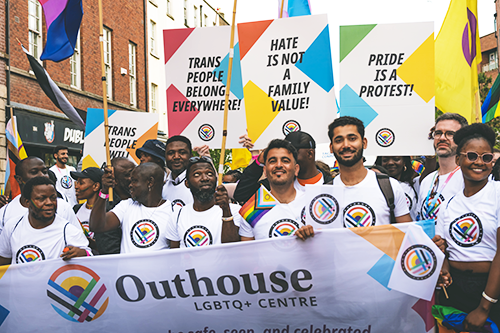
Finding Outhouse became an important turning point. “For me, Outhouse represents a kind of home. So whatever happens around the city or the general climate I’m living in, it’s still a reference for myself,” he explains.
Walking through the doors for the first time was not easy. “I’m coming from an environment which was very abusive, mentally and everything, so it was that bit slower. I took a step, but I was a bit suspicious with my expectations: What am I gonna find inside? What kind of people are in here? But once inside, it was just kind of surprising, to be honest. Surprising in that it was very welcoming. I felt safe.”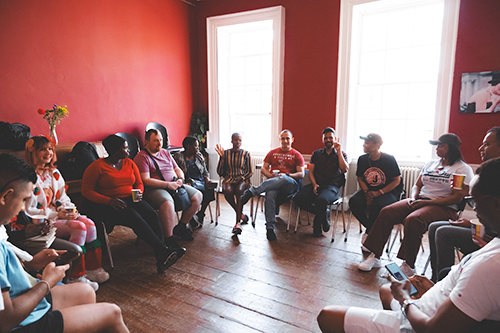 Inside, Noor found a community that accepted him without judgment. “I’ve met a lot of people, and no one cares where you’re coming from; the most important thing is that we’re a community,” he says. Through Outhouse’s Safe Space peer support group, he connected with people who had faced challenges of their own and understood what it was like to be different in a world that often discriminates.
Noor also engaged with courses on sexuality and gender identity. “In Outhouse, I’ve attended a lot of courses talking about sexual identities, understanding gender identities, a lot of stuff, so it allows me to understand. To understand my feelings. And to accept, totally, my identity,” he explains.
Over time, these connections helped Noor rebuild his confidence. “The best thing that happened to me since finding Outhouse… that’s having very good and loyal friends. It’s not that easy to have friends in these times, especially from the same community—still asking for each other, taking care of each other. It was the missing part of my self-confidence in the past.”
The support he received extended beyond friendship. Noor could access resources, share his experiences, and advocate for better conditions for asylum seekers, especially within the LGBTQ+ community.
Through Outhouse, Noor gained not only acceptance but also a sense of purpose and belonging. The centre gave him space to grow, understand himself, and form connections that strengthened his confidence and resilience.
__________
This story is true. The name “Noor” has been changed to protect the individual’s privacy.